The intestinal failure (IF) service required an Advanced Practitioner to meet rising national demand for type 2 and 3 IF care and ensure continuity across entire episodes of care inline with NHS priorities on workforce transformation, patient flow, and reducing unwarranted variation.
Maria contributes to the service by providing autonomous end‑to‑end clinical management, coordinating complex IF admissions, leading ward rounds, requesting and interpreting investigations, implementing treatment plans immediately, supporting national patient flow, and expanding research, quality improvement, education, and leadership capacity. Maria’s contribution has resulted in measurable improvements in patient experience and strengthened workforce capability.

Population
National tertiary unit for intestinal failure (IF) patients:
- Type 2 IF (metabolically unstable, >28 days PN)
- Type 3 IF (long‑term PN).
- 21 inpatient beds plus 5–10 outlying patients at any time.
- 400 outpatients on home PN
- National reference centre receiving frequent clinical queries from hospitals across the UK.
- Noted ageing population with complex comorbidities
Intervention:
- Complete autonomy over entire episodes of care: clerking, assessment, investigations, acute management, discharge.
- Orders diagnostics (X‑rays & CTs)
- Performs ward‑based procedures: venepuncture, cannulation, NGT placement, catheterisation, drain troubleshooting.
- Leads ward rounds and MDT decision‑making; daily huddles.
- Coordinates national patient flow and provides expert advice to external hospitals.
- Weekly outpatient clinic reviewing patients on home PN.
- Conducts QI projects and research
- Works as a supplementary prescriber, to avoid delays in care.
Outcomes/Impact
- Service impact – reduced delays in treatment by implementing care plans directly, direct and indirect patient flow and bed management
- Patient outcomes – higher patient satisfaction due to one clinician overseeing the entire journey, more timely investigations and treatment decisions, holistic dietetic reasoning, implementation of evidence-based changes
- Workforce outcomes – expanded skill mix, daily huddles & ward rounds, national teaching improving IF care and knowledge on site and across the UK.
- Quantitative data – The AP led ward round showed strong measurable impact, reporting: 100% clear communication; shared decision making; reduced anxiety around medical professionals; 93% finding goal setting helpful
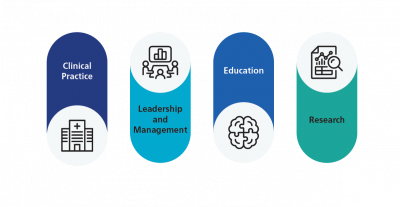
Maria incorporates the four pillars of practice in their role by:

Clinical
Autonomous start to finish management of patient population; acute decision making; ordering and interpreting diagnostics; carrying out procedures; running clinics and ward rounds; immediate implementation of care plans as appropriate
Leadership
Leads episodes of care; MDT coordination; daily huddles; national leadership roles for professional bodies (Community of AHP Research, British Dietetic Association); oversight of patient flow internally and nationally


Education
Continuously providing teaching to different professionals; daily on-ward education; national presentations; supporting professionals across the UK with IF services; embedding research literacy into the team
Research
QI projects (polypharmacy evaluations & implementing increased vitamin C supplementation); service evaluations; patient satisfactions surveys and implementing the feedback; journal publications; collaboration with local Universities and professional bodies; incorporation of evidence into practice